

Watch the video
How Aalo Atomics used Revel to bring a reactor critical in months
Overview
Aalo Atomics is setting out to disrupt the American energy industry with mass-manufactured nuclear power plants capable of powering everything from an AI data center to a large city. Racing against a tight federally-mandated deadline, Aalo Atomics used Revel to simulate, program, and operate its Critical Test Reactor in a fraction of the time legacy software would have required—helping the team go critical on schedule and accelerating the next generation of nuclear power.
The challenge
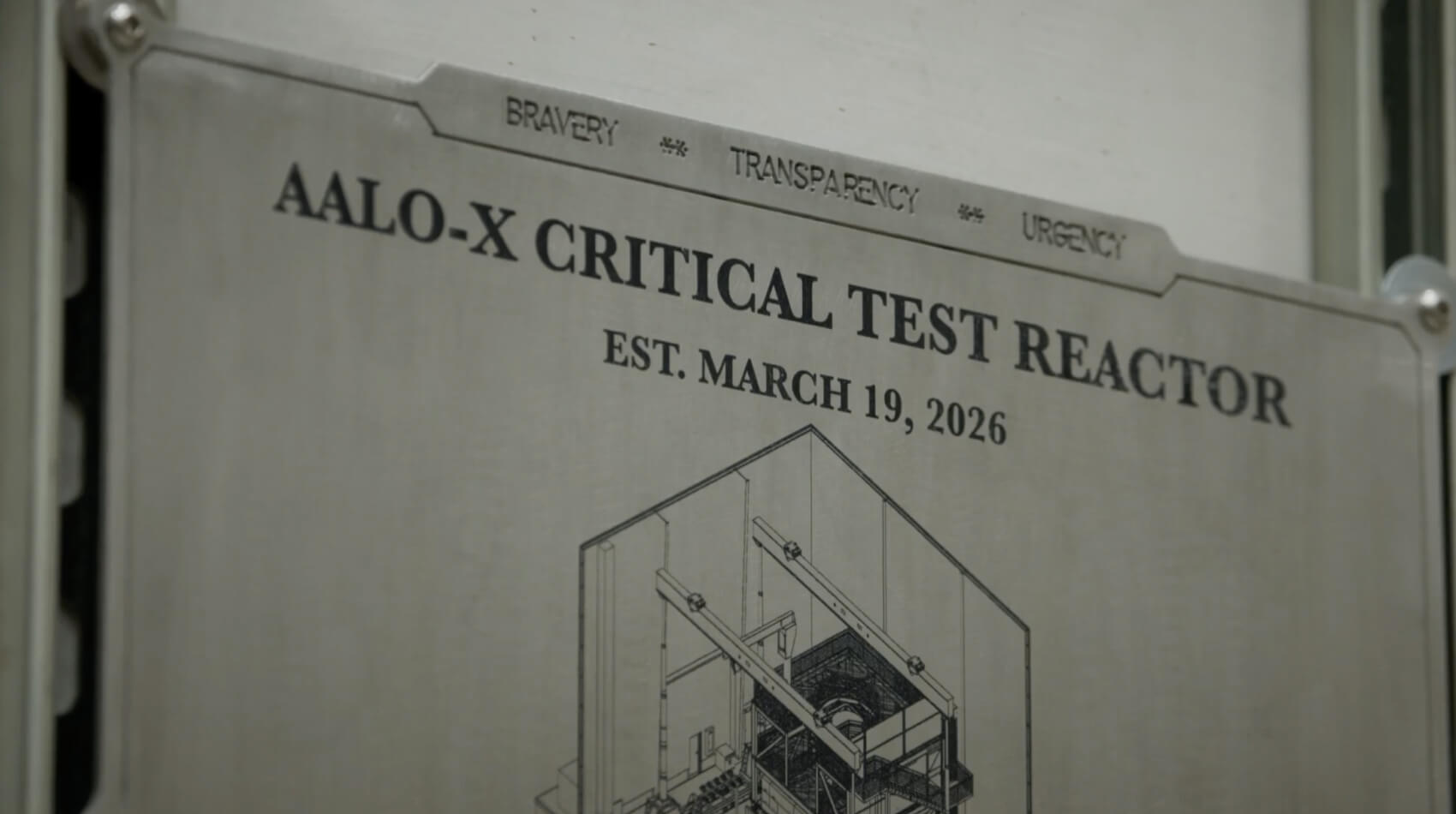
When Executive Order 14301 challenged Aalo Atomics to bring a nuclear reactor to criticality by July 4, 2026, the Instrumentation and Controls team needed a solution to streamline and simplify simulation, programming, and operator controls. That’s when they turned to Revel.
How Revel delivered
The Aalo team first piloted Revel on an urgent and active project: the Sodium Test Loop (STL), a heating system designed to keep sodium at temperatures over 100°C—liquid enough to pump through a complex system of pipes and valves. If piping wasn’t heated correctly, the sodium would freeze and cause a plug. But successfully pumping liquid sodium was crucial to unlocking Aalo’s mission to build a brand-new sodium reactor.
Revel’s team landed onsite in Idaho to deploy the platform, connecting directly to IO modules and setting up telemetry channels alongside Ben Anderson, Instrumentation and Controls Engineer. “It was obvious right away that this was going to be a game-changer,” said Ben. “With legacy software, you need to work through individual industrial protocols to connect with controllers if they’re not in the same family. But with Revel, we just connected to everything seamlessly.”

We got the whole program up and running in two days. That same program that had previously taken me two months to develop with legacy software.
Ben Anderson
Instrumentation and Controls Engineer — Aalo Atomics
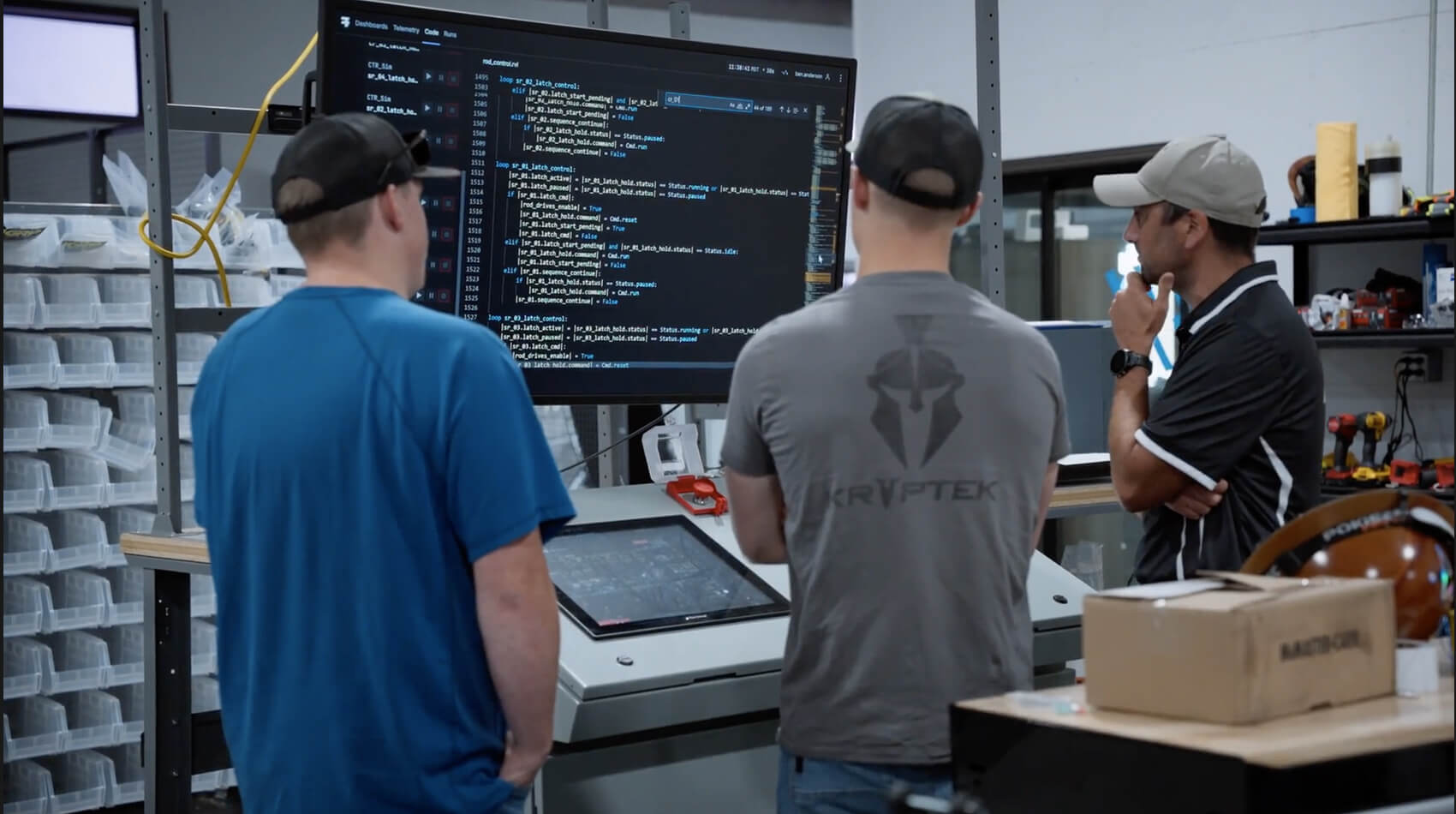
Ben then used RevelCode to develop the program for the STL, easily navigating the challenge of producing code for dozens of heaters: “I was able to develop the code for each of them without the typical copy-paste errors and typos that I usually faced while programming. Being able to iterate quickly through changes showed me that Revel was really powerful.” This part of the project was completed in record time. “We got the whole program up and running in two days. That same program that had previously taken me two months to develop with legacy software,” remarked Ben.
In March 2026, Aalo successfully pumped molten sodium for the first time, a meaningful step forward for the company. Day-of, Ben used Revel to “see all the trends [his team] needed to see, from our supply tank, to the thermocouples on different pipe sections, to the heaters, in order to quickly correlate the response of the system.” RevelCode helped Ben stay nimble even after getting STL online; as process engineers adjusted their requests, he used sequences to “automate, change, and adapt how the heat-up of the system went.” He was also empowered to use AI tools like Codex to accelerate the process of writing automation logic: “Revel uses YAML for configuration and JSON for the dashboards, both of which are very accessible and easy to work with using AI tools.” And RevelCode’s “human-readable” design meant everyone on the team could understand what changes were being made, and why.
Then, Ben started developing the program for the Critical Test Reactor (CTR). He first used Revel to stimulate the reactor and its systems: “It was easy to get going with a simulation in Revel—I quickly developed the code in Python and linked it with the Revel API. Setting that up in a legacy system would have been very challenging.”
Revel is protocol-agnostic: you can use Ethernet IP with an Allen-Bradley motor, you can use Ethernet IP with a Kollmorgen motor, you can use EtherCAT, or you can use PROFINET. Any of those protocols work in the Revel ecosystem, supporting our ability to shift when needed.
Ben Anderson
Instrumentation and Controls Engineer — Aalo Atomics
But hardware can be unpredictable. When the team ran into leadtime problems with their Kollmorgen motors, they were forced to prepare for a sudden pivot to Allen-Bradley motors. Ben was concerned about changing horses in mid-stream, but Revel made it easy: “Revel is protocol-agnostic: you can use Ethernet IP with an Allen-Bradley motor, you can use Ethernet IP with a Kollmorgen motor, you can use EtherCAT, or you can use PROFINET. Any of those protocols work in the Revel ecosystem, supporting our ability to shift when needed.” Once Ben had developed the initial logic in RevelCode for one motor, he leveraged it across ten different control rod drives, all of which could be tested from one dashboard in Revel.
Having Revel’s technical expertise and support has helped Ben problem-solve in high-stakes situations. When operators realized that a timescale on the trends dashboard didn’t line up, Ben simply gave his Revel team a call: “We were able to work through the problem, and within 30 minutes we had a solution.”
Impact and results
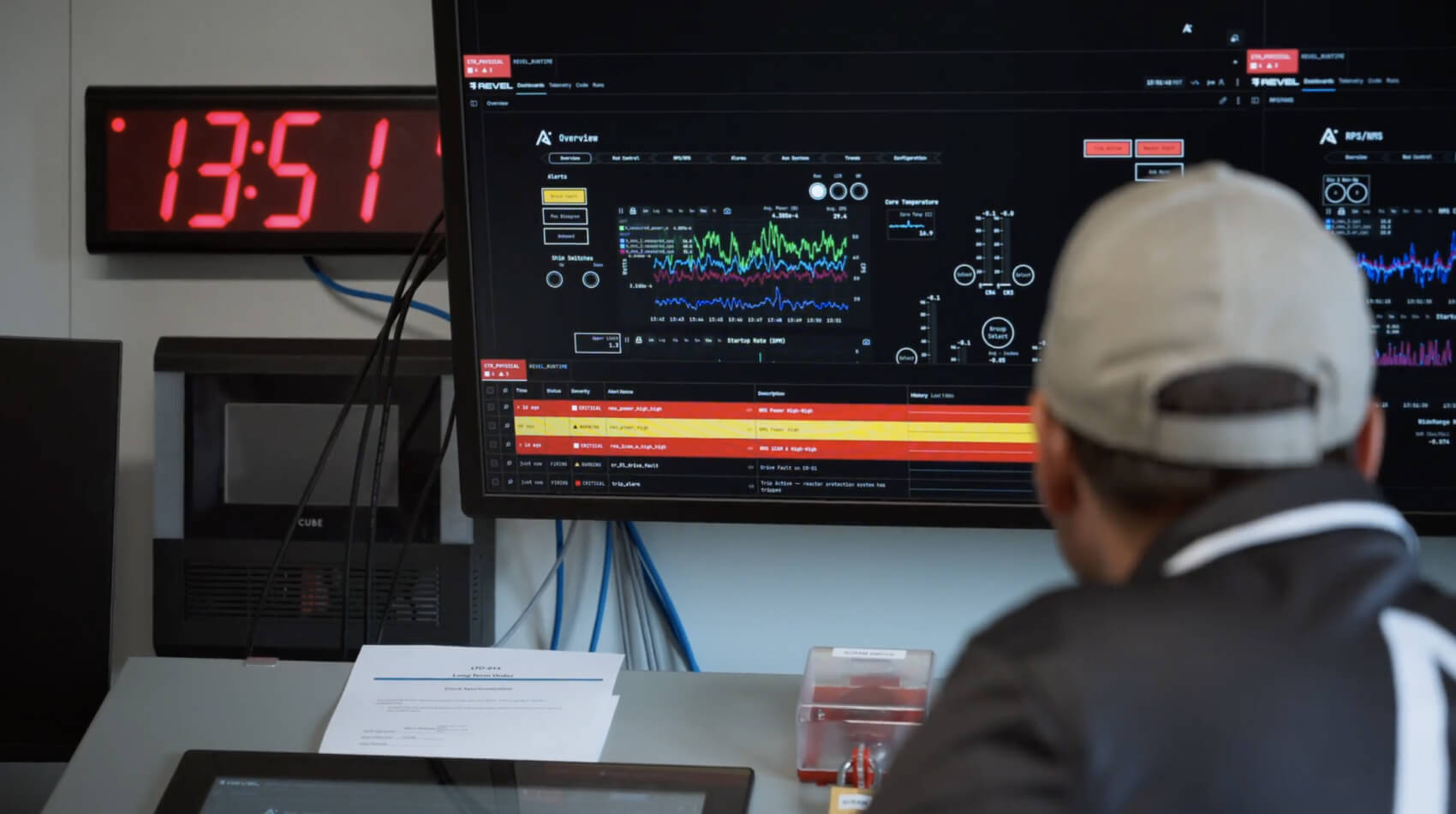
In July, it was time to bring the test reactor to criticality. “The weeks leading up to criticality, I spent every day working in Revel: doing the programming, developing dashboards for the control room, and getting feedback from users to make changes,” remembers Ben. Though the odds were stacked against them due to the compressed timeline, he kept the team optimistic.
I don’t think we could have gone critical without Revel. The IO points alone would have taken months to get programmed and to troubleshoot on any other platform. Using Revel saved us a ton of time. We were able to change things on the fly and get thousands of data points all in one place in a straightforward, streamlined way.
Dominic Radford
Instrumentation and Controls Technician — Aalo Atomics
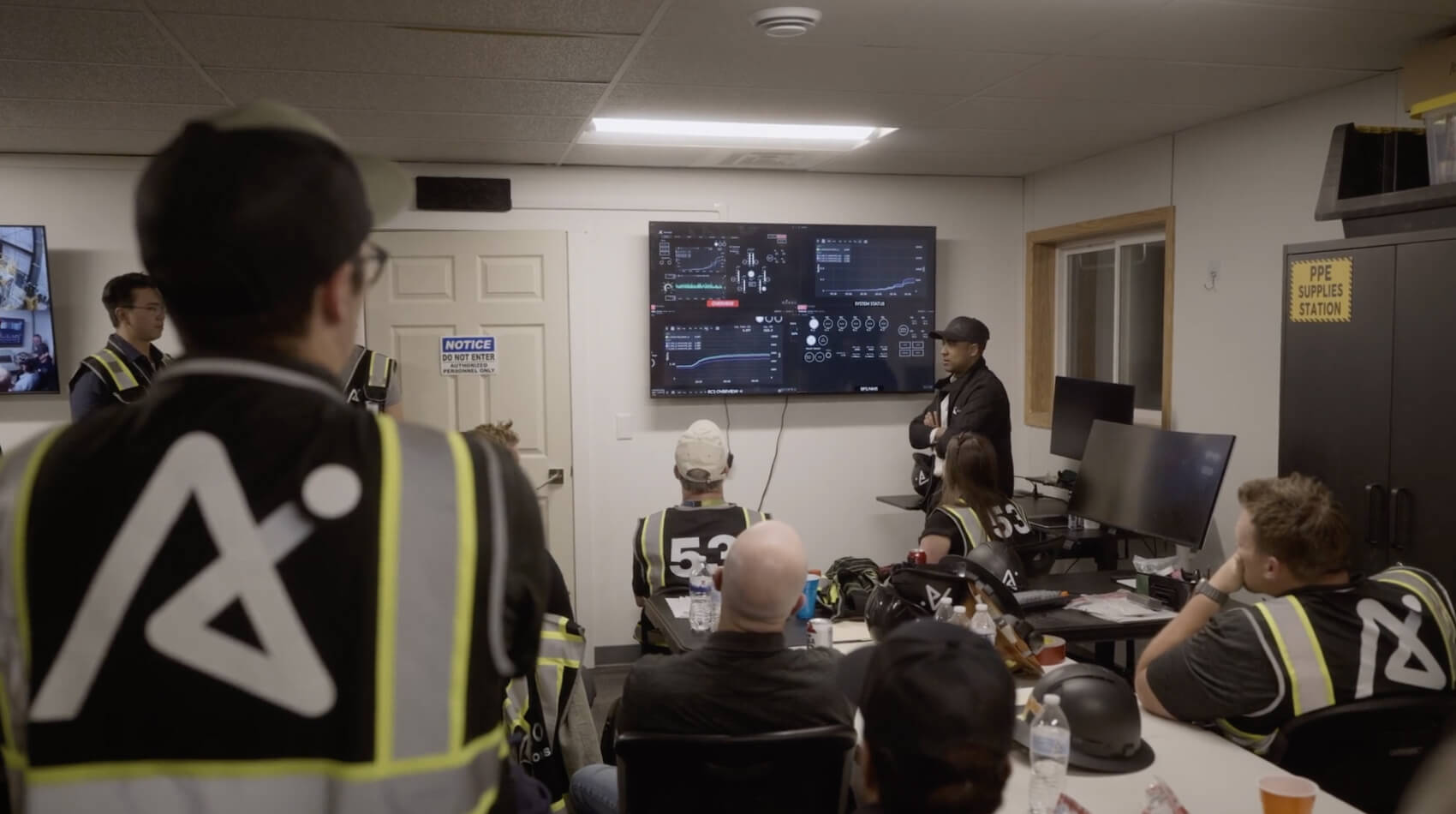
On July 4, the whole Aalo team watched the CTR power level on the Revel dashboards that Ben built. When it eventually started increasing at an exponential rate, indicating criticality, the team knew they’d been successful. “It was special to see this new reactor come to life on the displays that I created, and to see that my results from the Revel simulation were very similar to our actual results,” reflected Ben. The rest of the team shared a similar sentiment. “I don’t think we could have gone critical without Revel,” stated Dominic. “The IO points alone would have taken months to get programmed and to troubleshoot on any other platform. Using Revel saved us a ton of time. We were able to change things on the fly and get thousands of data points all in one place in a straightforward, streamlined way.”
Looking ahead
Instrumentation and Controls is now using Revel to test new devices in the STL. The team especially appreciates how much faster they’ve become with Revel: “In the past, 30- to 40-year-old software could have been a devastating bottleneck for projects like our criticality event. But Revel massively reduces the amount of connections we need to make and the steps we need to take to get a program running,” shared Jack Hall, Instrumentation and Controls Technician.

Aalo Atomics brought a reactor to criticality on an unprecedented timeline with Revel, which continues to support the team with the speed and flexibility they need to innovate American nuclear power.